

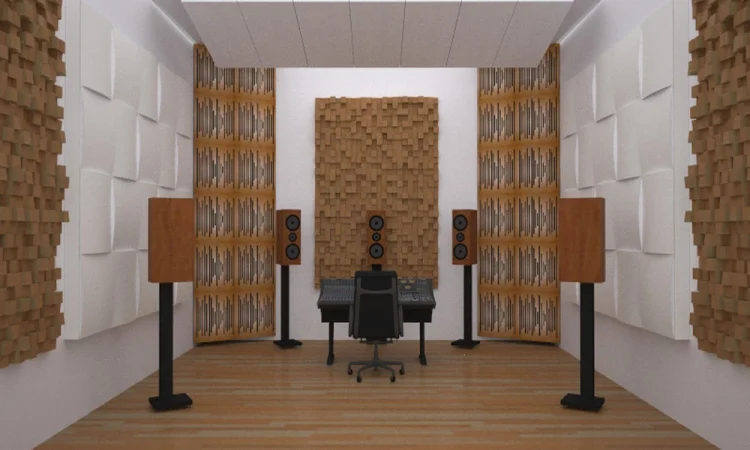

Spend a few minutes in a room, and you can usually tell whether the acoustics feel right. Conversations either flow naturally or feel slightly strained. Sometimes voices seem to linger longer than they should, or sounds overlap in a way that makes it harder to focus.
What’s interesting is that improving this doesn’t always require a full redesign. In many cases, it comes down to how sound-absorbing panels are placed.
A lot of people assume that installing panels anywhere on the wall will solve the problem. In reality, placement makes all the difference. Even a small number of well-positioned panels can create a noticeable improvement in how a space feels.
Here are some simple, practical tips to get better acoustic results without overcomplicating things.
Start with where sound actually travels.
Before placing any panels, it helps to understand how sound moves in a room. When someone speaks, sound spreads outward and reflects off nearby surfaces like walls, ceilings, and floors.
These reflections don’t always sound like obvious echoes. Instead, they build up subtly, making speech feel less clear and spaces feel more tiring over time. The key is to place panels where these reflections are strongest, rather than treating random sections of the room.
Focus on ear-level wall areas.
One of the easiest and most effective placement strategies is to install panels at ear level along walls.
This is where most direct reflections occur during conversations. When sound hits these surfaces, it bounces back toward listeners almost immediately.
By placing panels at this height, you reduce those early reflections and improve clarity without affecting the natural feel of the room.
In offices, this usually means walls near desks or meeting areas. In homes, it could be behind seating areas or along shared walls in open spaces.
Don’t ignore the ceiling.
Ceilings are often overlooked, but they play a major role in how sound behaves.
In rooms with hard ceilings, sound reflects downward and spreads across the space. This can contribute to that sense of constant background activity, especially in busy environments.
Adding ceiling panels or suspended baffles helps intercept sound before it reflects back into the room. This is particularly useful in:
- Open-plan offices
- Restaurants and cafés
- Rooms with high ceilings
Even a few panels in the right spots can make a noticeable difference.
Treat the wall directly facing the sound source.
Another simple tip is to place panels on the wall directly opposite where sound is coming from.
For example, in a meeting room, this might be the wall facing the main speaker. In a living room, it could be the wall opposite the television or seating area.
This helps reduce strong reflections that travel straight across the room and bounce back toward listeners.
It’s a straightforward adjustment, but one that’s often missed.
Spread panels out instead of clustering them.
It’s tempting to install panels in one section of the room, especially if you’re trying to create a visual feature. While this can look good, it’s not always the most effective approach acoustically.
Sound doesn’t stay in one place. It moves across the entire room, reflecting off multiple surfaces.
Spreading panels across different areas helps manage these reflections more evenly. This creates a more balanced sound environment rather than treating just one zone.
Pay attention to large, hard surfaces.
Big, uninterrupted surfaces tend to reflect the most sound. These include:
- Glass walls
- Long plastered walls
- Concrete surfaces
- Bare ceilings
If you’re deciding where to prioritise panel placement, these areas are a good starting point.
Treating even part of a large surface can reduce how much sound reflects across the room.
Adjust placement based on the room type.
Different spaces have different acoustic needs, so panel placement should reflect how the room is used.
In offices, the goal is often to reduce distraction and improve focus. Panels should be placed near workstations and shared areas where conversations happen.
In meeting rooms, clarity is the priority. Panels should target reflection points around the table and walls facing each other.
In homes, placement is more about balance. Panels can help define zones in open-plan layouts or reduce sound spread between living areas.
Thinking about how the space is used makes placement decisions much more effective.
Don’t overlook symmetry and alignment.
While acoustic performance is important, visual placement still matters.
Panels that are evenly spaced or aligned with architectural features tend to look more intentional. This makes it easier to integrate them into the overall design of the space.
The goal is to find a balance between function and aesthetics. Good placement should improve sound while still feeling natural within the room.
Start small and adjust if needed.
You don’t always need to install a large number of panels right away.
Starting with a few panels in key areas allows you to see how the space responds. From there, you can add more if needed or adjust placement for better results.
Acoustic improvement is often a gradual process rather than a one-time fix.
Common mistakes to avoid.
There are a few placement mistakes that can limit how effective sound panels are:
- Installing panels too high, away from reflection points
- Ignoring ceilings in rooms with noticeable sound build-up
- Concentrating panels in one area only
- Choosing placement based purely on appearance
Avoiding these issues can go a long way in achieving better results.
Final Thoughts
Improving acoustics doesn’t have to be complicated. In many cases, it comes down to placing sound panels with intention rather than guesswork.
When panels are positioned where sound actually reflects, they can significantly improve how a space feels. Conversations become easier to follow, and the environment feels more balanced overall.
It’s a simple upgrade, but one that makes a lasting difference in how a room is experienced every day.